
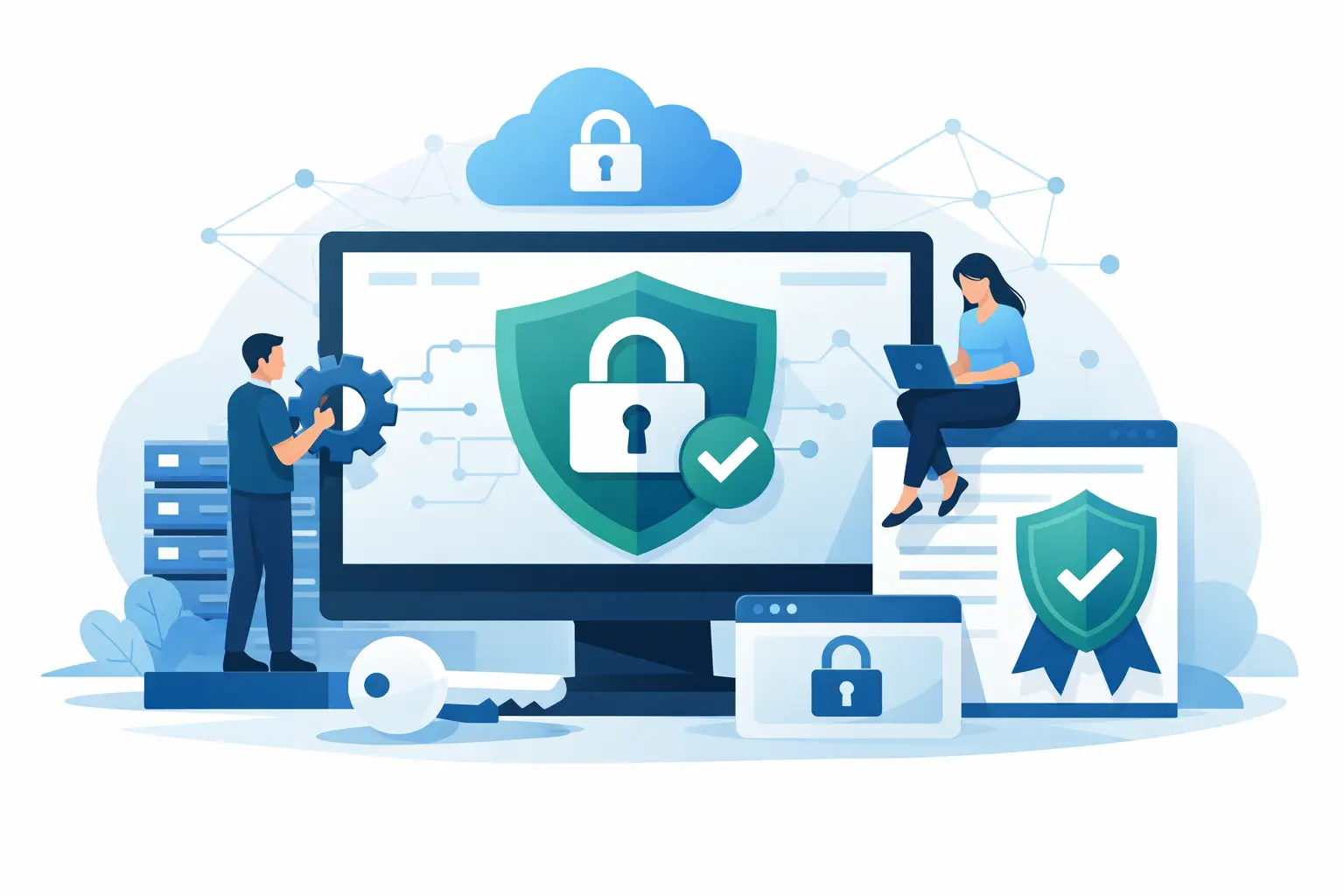
A browser warning can end a customer journey before it begins. When visitors see “Not Secure,” many will leave before submitting an inquiry, completing a purchase, or trusting your organization with their information. Professional ssl certificate installation services help businesses avoid that costly first impression by correctly securing the connection between a website and its visitors.
For organizations that rely on their website to generate leads, process payments, publish information, or support customer service, SSL is not a minor technical task. It is part of the foundation for credibility, data protection, search visibility, and reliable online operations.
What SSL Certificate Installation Services Should Include
An SSL certificate enables HTTPS, the secure version of a website address. It encrypts information transferred between a visitor’s browser and the website server. That can include contact form entries, login credentials, payment details, customer records, and internal administrative access.
Buying a certificate is only one part of the job. The certificate must be installed correctly on the active server, matched to the right domain, configured with the required intermediate certificates, and tested across the live website. A weak or incomplete setup can still trigger security errors, browser warnings, redirect loops, mixed-content alerts, or failures in email and application integrations.
A complete service should begin by checking the current hosting environment, domain configuration, web server, and certificate type. The technical requirements are different for a basic informational website, a busy eCommerce store, and a company operating multiple subdomains or customer portals.
A professional installation typically covers certificate generation or deployment, Certificate Signing Request handling when needed, server configuration, HTTPS redirect setup, intermediate certificate installation, browser testing, and final verification. It should also include a review for insecure page elements such as images, scripts, fonts, or forms that still load through HTTP.
The objective is straightforward: every visitor should reach the secure version of the site without confusion, warnings, or interrupted functionality.
Why Correct Installation Affects More Than Security
SSL protects data, but its commercial impact reaches further. Website visitors have learned to look for the padlock icon and HTTPS address before they share information. A secure connection supports the confidence required for customers to submit a form, request a quote, create an account, or complete a transaction.
Search engines also favor secure websites as a baseline expectation. SSL alone will not move a website to the top of search results, but an unsecured site can create a preventable disadvantage. More critically, browser security warnings can raise bounce rates and reduce conversions, even if the website design, advertising, and content are otherwise strong.
For eCommerce businesses, proper implementation is closely tied to payment gateway requirements and customer confidence. For institutions, healthcare providers, professional firms, and government-facing organizations, it helps demonstrate responsible handling of user information. For any brand, HTTPS protects the credibility built through design, marketing, and customer service.
There is also an operational consideration. Many business websites connect with third-party tools, including payment providers, CRM platforms, email systems, booking engines, analytics tools, and mobile applications. An SSL change can affect those connections if redirects, URLs, or server rules are not managed carefully. This is why installation should be treated as a controlled technical update rather than a quick checkbox.
Choosing the Right Certificate for Your Website
The right certificate depends on the structure and purpose of the website. Not every business needs the same coverage, and paying for the wrong type can create unnecessary complexity or leave part of the digital infrastructure unprotected.
A single-domain certificate is suitable when one primary domain needs protection, such as example.com. It may also cover the www version when configured appropriately, but this should always be confirmed before purchase and installation.
A wildcard certificate is designed for businesses using multiple subdomains, such as shop.example.com, portal.example.com, and mail.example.com. It can simplify certificate management for a growing digital environment. However, it should be managed carefully because one certificate may secure many services.
A multi-domain certificate, also called a SAN certificate, is often better for organizations that need to protect several different domain names under one certificate. This can be useful for brand groups, campaigns, institutions, or companies with separate websites and platforms.
Validation level matters as well. Domain Validated certificates are commonly used and issued quickly after domain control is confirmed. Organization Validated certificates include verification of the organization behind the domain, which may suit businesses seeking an additional trust signal. Extended Validation has a more detailed verification process, though modern browsers do not display its identity indicators as prominently as they once did.
The best choice depends on the website architecture, future plans, compliance needs, and the level of administrative control required. A qualified provider should recommend the appropriate option rather than selling a certificate that does not fit the business.
Common Problems After SSL Installation
The padlock does not appear simply because a certificate has been added to the server. Several issues can prevent a website from displaying as fully secure.
Mixed content is one of the most common problems. It happens when a secure HTTPS page loads an element through an unsecured HTTP connection. The element may be an old image URL, a JavaScript file, a stylesheet, an embedded video, or a third-party tracking code. Browsers may block the item or mark the page as partially secure.
Another issue is an incomplete certificate chain. The main certificate may be present, but the intermediate certificates required for browsers to validate it are missing or incorrectly configured. Visitors may then receive a certificate warning despite the installation appearing correct in a basic server check.
Redirect configuration can also cause trouble. If HTTP does not consistently redirect to HTTPS, visitors may access two versions of the same website. This can dilute tracking data, create duplicate content concerns, and leave some user sessions unsecured. On the other hand, a poorly written redirect rule can create a loop that makes the site inaccessible. Testing matters.
Finally, expired certificates remain a major and avoidable risk. Certificate expiration can trigger alarming browser messages that damage trust immediately. Renewal reminders, automated monitoring, and a clear ownership process protect the business from an outage that should never happen.
A Managed Approach to SSL Certificate Installation Services
For a business team, the value of managed SSL support is not just technical execution. It is accountability. Someone should know when the certificate expires, which domains it covers, where it is installed, and how it interacts with hosting, email, forms, applications, and campaign landing pages.
A capable digital partner will document the setup, confirm that HTTPS is enforced, test major user paths, and make sure the website remains functional after the change. For active websites, installation should be planned around business needs so that potential disruption is minimized. A small brochure website may require only a brief configuration window, while a large eCommerce platform needs more extensive checks across checkout, account access, payment processing, and integrations.
This is especially valuable when website hosting, development, marketing, and maintenance are handled by separate vendors. Fragmented responsibility often leads to delays when a certificate needs renewal or a browser warning appears. Working with one experienced provider creates a clearer route from issue to resolution.
InteracOman supports organizations that need their web infrastructure, design, development, and ongoing digital presence managed with the same professional standard. With more than 1,000 websites powered, the team understands that technical reliability must support real business outcomes, not sit behind the scenes as an afterthought.
When to Review Your SSL Setup
Do not wait for a browser warning to assess certificate health. Review your SSL configuration when launching a new website, moving to a new host, adding subdomains, introducing online payments, connecting a mobile app, changing domain names, or rebuilding an existing platform.
It is also wise to check the setup before a major campaign. If paid search, social media advertising, email promotion, or public relations activity sends a large audience to an unsecured or incorrectly configured page, marketing spend can be wasted at the point of conversion.
Ask your provider whether the certificate covers all required domains, whether renewal is monitored, whether HTTP traffic is redirected correctly, and whether the site has been checked for mixed content. Those answers reveal whether the security setup is actively managed or merely assumed.
Your website asks visitors to trust your business within seconds. Make sure the first technical signal they see supports that decision, then ask for a free quote to put the right SSL protection and ongoing oversight in place.



0 Comments