
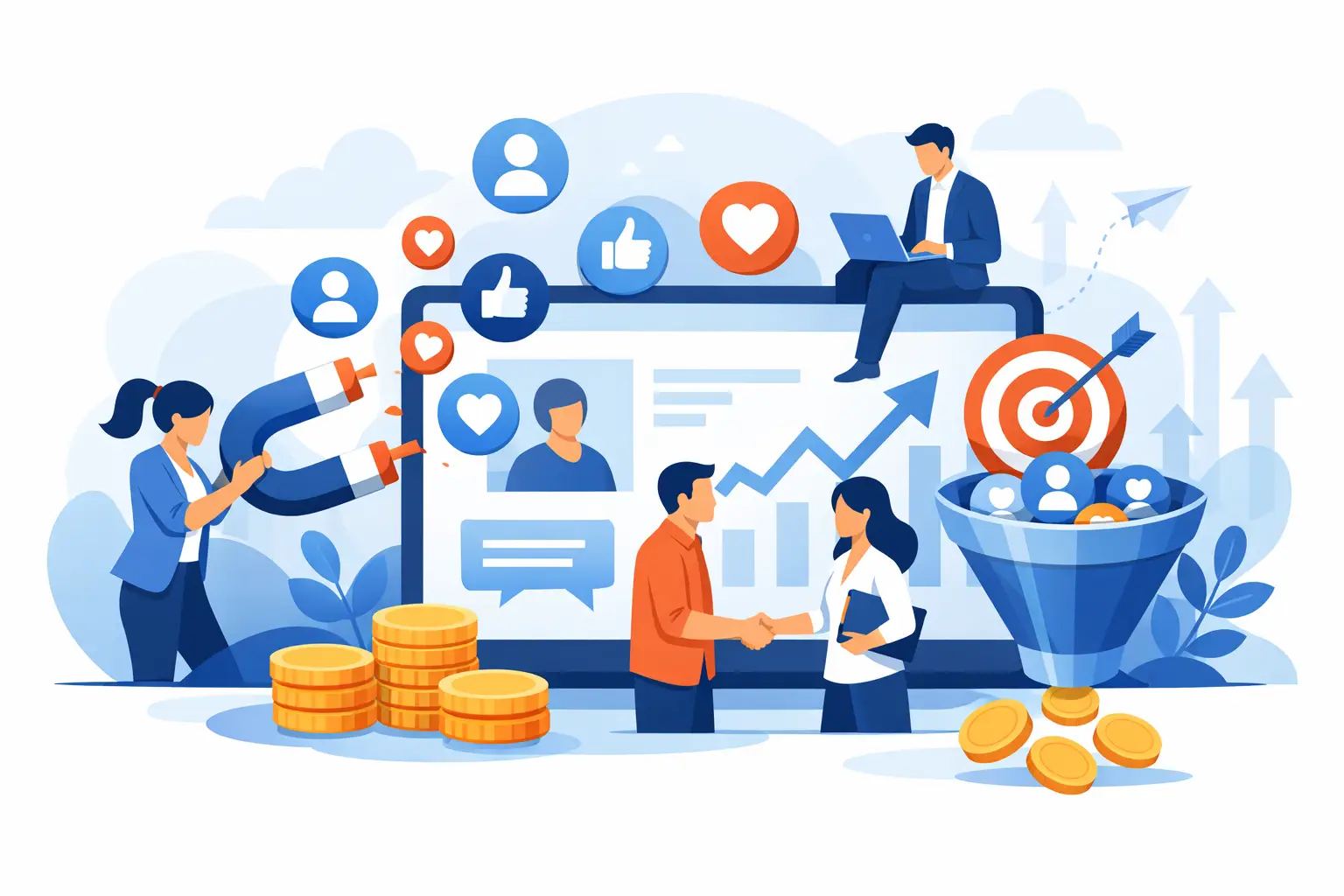
A busy social profile can create the illusion of momentum. Likes rise, videos receive views, and followers increase, yet the sales team still asks the same question: where are the qualified inquiries? Social media lead generation closes that gap by giving every campaign a defined commercial purpose – moving the right people from attention to action.
For businesses in Oman and growth-focused brands serving competitive markets, social media should not operate as a separate publishing task. It should support a connected digital system: a credible website, a clear offer, relevant content, a reliable lead capture path, and fast follow-up. When those elements work together, social platforms become a practical source of business opportunities rather than a monthly reporting exercise.
What Makes a Social Lead Valuable?
A lead is not simply someone who submits a form. A valuable lead has a recognizable need, fits the business’s target market, and has taken an action that suggests genuine intent. For a property developer, that might be a prospect requesting project availability. For a B2B supplier, it could be a procurement manager asking for specifications. For a clinic, it may be a patient booking a consultation.
This distinction matters because broad engagement is often inexpensive while qualified demand is not. A campaign built only to maximize reach can attract people who enjoy the content but have no reason to buy. A lead-generation campaign needs a tighter message: who the offer is for, what problem it solves, and what should happen next.
The strongest programs also define lead quality before advertising begins. Sales and marketing teams should agree on what counts as a marketing-qualified lead, which questions must be collected, and how quickly an inquiry will receive a response. Without that agreement, performance can look successful on a dashboard while producing little commercial value.
Build Social Media Lead Generation Around a Clear Offer
Most prospects will not provide their contact details just because a company posts regularly. They need a worthwhile reason to continue the conversation. That reason is the offer.
An effective offer should match the buyer’s stage of decision-making. A business comparing providers may respond to a free consultation, site audit, estimate, product demonstration, or consultation booking. Someone at an earlier research stage may prefer a checklist, buyer guide, case study, pricing overview, or invitation to an educational event.
The offer should be specific enough to create urgency without making promises the business cannot fulfill. “Contact us for more information” is familiar but weak because it gives the prospect no clear benefit. “Request a custom eCommerce growth plan” or “Book a free website performance review” tells the audience what they will receive and makes the next step easier to understand.
There is a trade-off. A broad offer can produce a higher number of submissions, while a more demanding offer may generate fewer but better-qualified leads. Businesses with a longer sales cycle should usually prioritize relevance and buying intent over volume. A sales team has limited time, and one serious inquiry can be worth more than fifty incomplete forms.
Choose Platforms Based on Buyer Behavior
The best channel depends on the audience, industry, and offer. Instagram and Facebook can be highly effective for consumer services, hospitality, retail, real estate, education, and visually led brands. LinkedIn is often a stronger choice for professional services, corporate training, industrial suppliers, technology firms, and B2B decision-makers. Short-form video platforms can build awareness quickly, but they need a strong conversion path if the objective is lead capture.
Do not assume every business needs to be active everywhere. A focused presence on one or two platforms, supported by quality creative and responsive management, usually outperforms a thin presence across five channels.
Organic content builds credibility over time, while paid social campaigns provide targeting, scale, and measurable lead acquisition. The most effective approach often combines both. A prospect may first see useful organic content, later encounter a targeted advertisement, visit the website, and then submit an inquiry after seeing a testimonial or a practical offer. That is why consistent branding and message alignment matter across every touchpoint.
Use Content to Earn Attention Before Asking for Details
A lead form should not be the first and only experience people have with a brand. Before asking for an inquiry, show evidence of expertise. Explain common customer problems, share project outcomes, demonstrate a product, answer recurring questions, or show the people and processes behind the business.
For example, a website development company can publish before-and-after redesign insights, explain why mobile speed affects conversion, or show how a clear checkout experience supports eCommerce revenue. This type of content does more than fill a calendar. It gives decision-makers a reason to trust the company behind the campaign.
Creative quality is also a commercial factor. Poorly lit imagery, vague copy, and generic stock visuals can undermine a premium offer. Professional photography, video, branding, and design help a campaign earn the pause that social platforms demand. But polished creative alone is not enough. The message must speak to a real need in language the audience recognizes.
Make the Conversion Path Friction-Free
Once someone clicks an ad or call to action, the experience must continue with the same clarity. Sending prospects to a homepage forces them to search for the information that motivated their click. A dedicated landing page is usually the better option because it keeps the audience focused on one offer and one action.
A high-performing landing page should quickly confirm the offer, explain the value, establish credibility, and make contact simple. Include a concise headline, supporting details, relevant proof, and a form that requests only the information needed to qualify the inquiry. If the sales process requires a phone number, company name, budget range, or preferred service, ask for it. If those details are not essential at this stage, avoid adding unnecessary fields.
Mobile performance deserves particular attention. Many social users will reach the page from a smartphone, often on a limited connection and with little patience for slow loading times. A page that is visually impressive but slow, difficult to read, or awkward to complete will waste advertising spend.
Lead forms built directly into social platforms can reduce friction and work well for simple offers. However, they may provide less context and can attract lower-intent responses. Landing pages generally give businesses greater control over brand experience, analytics, qualification, and next-step messaging. The right choice depends on the campaign: test both when the budget and tracking setup allow it.
Follow Up While Interest Is Still High
Lead generation does not end at submission. It begins a time-sensitive conversation. A prospect who has just requested a quote is actively evaluating options, and a delayed response gives competitors an opening.
Set a response standard for every campaign. For high-intent inquiries, aim to reply within minutes or as quickly as operations permit. Use automated acknowledgment messages to confirm receipt, but do not let automation replace human contact. A thoughtful call, email, or WhatsApp response that addresses the prospect’s stated need will create a stronger impression than a generic template.
The follow-up process should also be visible to marketing. If leads are unreachable, poorly matched, or repeatedly asking the same questions, that feedback should improve the targeting, form fields, ad copy, and landing page. Lead generation works best when campaign teams and sales teams share responsibility for outcomes rather than treating handoff as the finish line.
Measure the Metrics That Protect Your Budget
Cost per lead is useful, but it is not the final measure of success. A low-cost campaign can be expensive if the leads never answer calls or cannot afford the service. Track the full journey from impression and click through submission, qualification, meeting, proposal, and sale.
At a minimum, review lead volume, cost per lead, conversion rate, response time, qualified lead rate, and revenue or pipeline value. For businesses with offline sales processes, connect campaign data to the CRM or a disciplined lead tracking method. This makes it possible to see which audiences, messages, and offers create real business rather than surface-level activity.
Testing should be deliberate. Change one meaningful variable at a time, such as the offer, audience segment, visual concept, form length, or landing page headline. Running several unrelated changes at once can make results difficult to interpret. Small, continuous improvements often create more value than replacing an entire campaign every few weeks.
Turn Campaign Activity Into a Reliable Growth System
Social media can generate fast interest, but dependable results come from the infrastructure behind it. Your website must support trust. Your hosting must support speed and availability. Your creative must reflect the quality of your business. Your sales process must respond with confidence and consistency.
InteracOman helps organizations bring these capabilities together, from high-impact websites and landing pages to campaign creative, social media marketing, search visibility, and ongoing digital support. This integrated approach matters when every click represents a potential customer and every missed handoff has a cost.
Start with one focused offer for one clearly defined audience, then build the campaign around the action that matters most to your business. The objective is not to collect names. It is to create more meaningful conversations with people ready to move forward.
0 Comments