
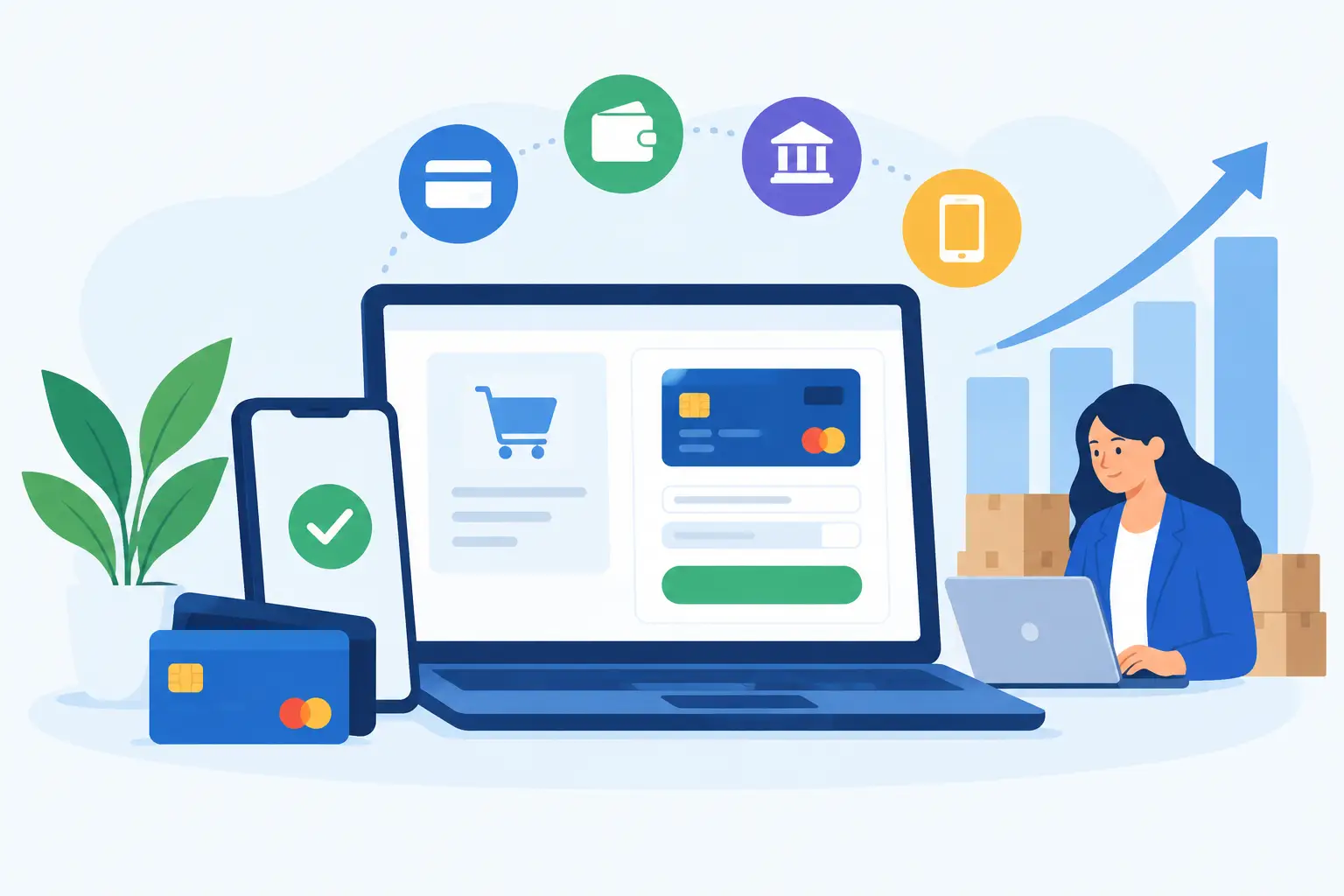
A customer has selected a product, entered delivery details, and reached the final step. That moment is where an online sale is won or lost. This online payment gateway guide explains how businesses can choose a payment setup that earns trust, supports operations, and gives customers a clear reason to complete checkout rather than abandon it.
For organizations building eCommerce platforms, booking portals, subscription services, or mobile applications, payments are not a minor technical feature. They affect revenue, customer confidence, reconciliation, support workload, and the ability to grow into new markets. The right gateway should fit the business model, not force the business to work around its limitations.
What an Online Payment Gateway Does
An online payment gateway securely transfers payment information between a customer, an eCommerce website or application, the acquiring bank, and the card network or payment provider. In practical terms, it verifies whether a payment can be authorized and returns an approval or decline to the checkout experience.
A gateway is often confused with a payment processor or merchant account. These services may be offered together, but they serve different functions. The gateway manages the secure communication at checkout. The processor moves funds through the payment network. A merchant account is the business account arrangement that allows a company to accept card payments and receive settlements.
For a customer, this process should feel immediate. For the business, it should be secure, traceable, and dependable even during a promotion, seasonal demand spike, or high-volume campaign.
Online Payment Gateway Guide: Start With Your Business Model
The best payment solution depends on what the business sells, who pays, and how payment is collected. A retail store moving online has different needs from a professional services firm accepting deposits or an institution collecting recurring fees.
Start with the transaction flow. A business selling physical products needs clear payment confirmation, inventory updates, refunds, shipping integration, and fraud controls. A booking-based company may need partial payments, cancellation rules, and authorization holds. Subscription businesses need tokenized card storage, scheduled billing, payment retry logic, and customer self-service options.
The market also matters. If customers are primarily local, verify that the gateway supports the cards, currencies, banking relationships, and payment methods they use. If the business sells internationally, consider multi-currency acceptance, foreign card approval rates, settlement currencies, cross-border fees, and country-specific compliance requirements.
Do not choose a gateway based only on the transaction fee. A lower published rate may be offset by setup charges, monthly minimums, refund costs, currency conversion charges, chargeback fees, or expensive development work. The total cost should be evaluated against the value of higher approval rates, a smoother checkout, and simpler back-office operations.
Security Is a Customer Experience Issue
Customers may not understand tokenization, encryption, or payment security standards, but they recognize warning signs immediately. A redirect that looks unrelated to the brand, an unexpected error page, or a checkout that requests excessive information can create doubt at the exact point where confidence matters most.
A credible gateway should support strong encryption and operate in accordance with Payment Card Industry Data Security Standard requirements. For most businesses, the goal is to minimize direct exposure to card data. Hosted payment fields, tokenization, and provider-managed checkout pages can reduce the amount of sensitive information handled by the website itself.
Fraud prevention deserves equal attention. Look for features such as address verification, card security code checks, velocity limits, device and behavior monitoring, 3D Secure authentication, and configurable fraud rules. However, more security is not always better if it rejects legitimate customers. The objective is to reduce fraud without creating unnecessary friction for real buyers.
This is why gateway configuration should be reviewed after launch. Fraud patterns, customer locations, order values, and product categories change over time. Rules that were appropriate during launch may later be too strict or too relaxed.
Build Checkout Around Trust and Completion
A payment gateway can be technically capable yet still underperform if the checkout experience is poorly designed. Payment should feel like a natural continuation of the purchase, not a separate process that interrupts it.
Keep the checkout page focused. Show a clear order summary, total price, delivery cost, and any applicable taxes before payment is submitted. Use familiar payment labels and tell customers what happens next. If a payment fails, provide a helpful message and preserve the customer’s cart and entered details where possible.
Mobile checkout requires particular care. Many customers will make decisions on a phone, often with limited time and inconsistent connectivity. Forms should be easy to complete, buttons should be visible, and the payment flow should not depend on tiny fields or unnecessary page loads. Digital wallets and stored payment methods can reduce effort, but they should be added because they serve the audience, not because they are fashionable.
Brand consistency matters as well. Whether payment is embedded on the site or completed through a hosted provider page, customers should see the same business identity, order details, and professional presentation. A disconnected experience can reduce conversion even when the gateway itself is secure.
Integration Choices: Hosted, Embedded, or Custom
There are three common ways to connect a payment gateway to a website or application. A hosted checkout sends the customer to a payment page managed by the provider. This is usually faster to implement and can reduce compliance scope, though it offers less control over the visual journey.
An embedded checkout places provider-managed payment fields within the website. It can provide a more consistent customer experience while keeping sensitive card data away from the business server. This is often a strong choice for companies that need a branded checkout without the complexity of handling payment data directly.
A fully custom integration gives the greatest flexibility for advanced workflows, marketplaces, saved cards, split payments, subscriptions, or enterprise systems. It also requires experienced development, disciplined testing, ongoing maintenance, and clear responsibility for security. Custom is not automatically better. It is appropriate when the commercial need justifies the additional investment.
Before implementation, confirm compatibility with the existing eCommerce platform, content management system, accounting workflow, customer relationship management system, and mobile application. A gateway that works in isolation can create costly manual work if transactions, invoices, refunds, and customer records do not stay aligned.
Questions to Ask Before You Sign
A provider demonstration should answer practical operational questions, not only showcase a polished checkout page. Ask how quickly funds settle, how refunds are processed, whether staff can issue partial refunds, and what reporting is available for finance teams.
Also ask how the provider handles outages, disputes, and technical support. Payment failures do not wait for convenient business hours. A clear support path, useful error reporting, and documented integration tools can make a major difference when revenue is at risk.
Four questions are especially valuable:
- Which cards, currencies, and local payment methods can our customers use?
- What are the full costs for transactions, refunds, chargebacks, settlements, and currency conversion?
- How does the gateway protect against fraud while preserving legitimate approval rates?
- Can the integration support our next stage of growth, including mobile, recurring billing, or international sales?
The answers should be documented and compared against the business’s actual priorities. A startup may value speed and predictable costs. An established organization may need deeper reporting, approval controls, and integration with existing finance systems. Neither approach is wrong.
Test the Payment Journey Before Launch
A gateway is ready only after the complete payment journey has been tested. That includes successful payments, declined cards, interrupted connections, duplicate submissions, refunds, canceled orders, expired sessions, and customer confirmation emails.
Testing should involve more than the development team. Finance staff should confirm that settlements and reporting reconcile correctly. Customer service teams should know how to locate transactions and respond to common payment questions. Marketing teams should verify that campaign tracking does not break when customers move through checkout.
After launch, monitor conversion from cart to completed order, payment decline reasons, refund volume, chargeback rates, and support inquiries. These indicators reveal whether the payment experience is supporting growth or quietly creating friction.
A high-impact payment setup combines secure technology with a checkout experience customers trust and teams can manage confidently. InteracOman helps businesses bring that standard into their websites and digital platforms, from strategic planning and eCommerce development to ongoing technical support. The strongest next step is to map the payment journey your customers expect, then build it with the same care you give to every sale.

0 Comments